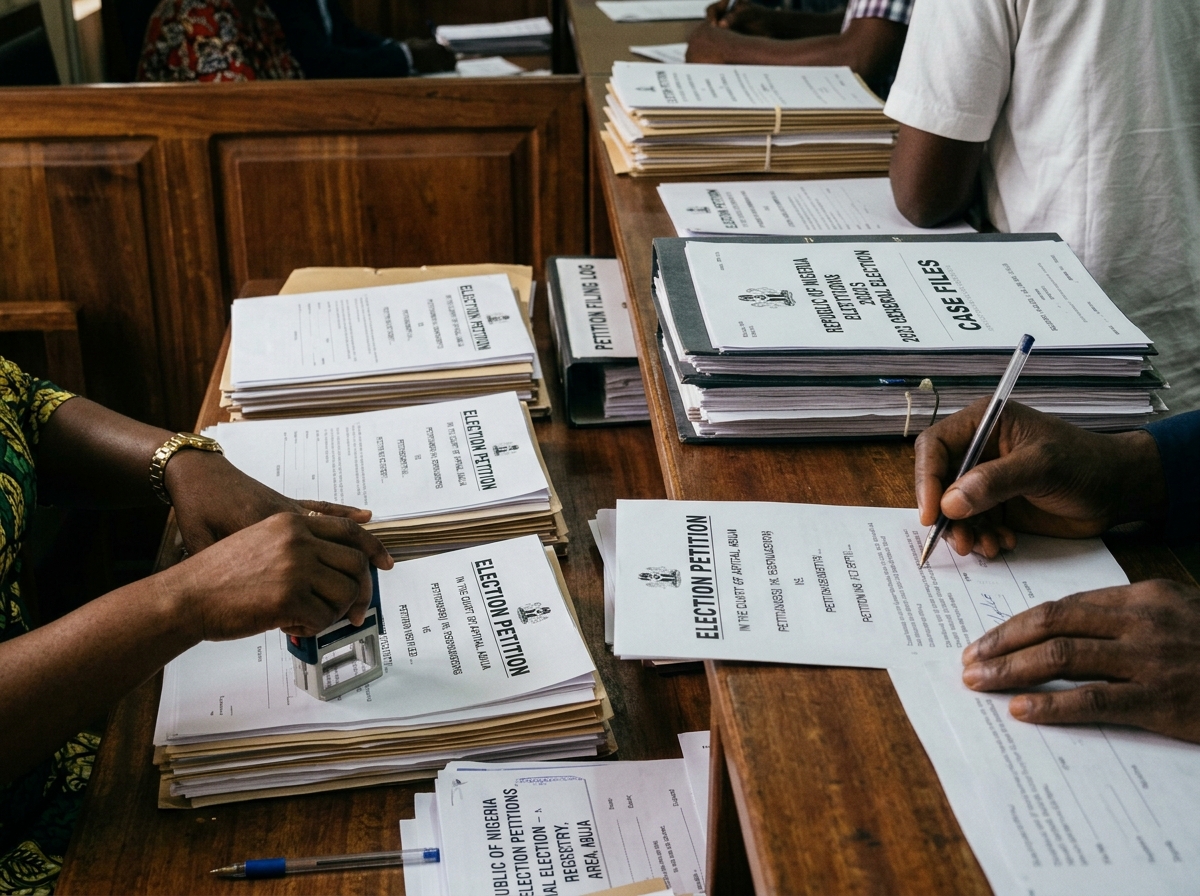
Election petitions are one of the most specialised and time-sensitive areas of Nigerian law. When the outcome of an election is disputed, aggrieved candidates and political parties must act quickly, precisely, and with the right legal representation to have any chance of success.
What Is an Election Petition?
An election petition is a formal legal challenge brought before an Election Tribunal or Court to contest the outcome of an election. It is distinct from ordinary civil litigation in procedure, timelines, and evidence rules, and the consequences of procedural errors can be fatal to an otherwise meritorious case.
The Legal Framework
Election petitions in Nigeria are governed primarily by the Electoral Act, 2022 and the Constitution of the Federal Republic of Nigeria, 1999 (as amended). Key governing legislation includes:
- Electoral Act, 2022 (as amended)
- Constitution of the Federal Republic of Nigeria, 1999
- Election Tribunal and Court Practice Directions issued by the Chief Justice of Nigeria
- Federal High Court (Civil Procedure) Rules (for applicable matters)
Grounds for Filing an Election Petition
Under Section 133 of the Electoral Act 2022, a petition may be presented on the following grounds:
- The person whose election is questioned was, at the time of the election, not qualified to contest
- The election was invalid by reason of corrupt practices or non-compliance with the Electoral Act
- The respondent was not duly elected by a majority of lawful votes cast
- The petitioner or its candidate was validly nominated but unlawfully excluded from the election
Critical Timelines You Must Know
Time is the greatest enemy in election petition litigation. The Electoral Act 2022 imposes strict, non-extendable deadlines:
- 21 days from the declaration of results to present a petition at the Tribunal
- 180 days from presentation of the petition for the Tribunal to deliver judgment
- 60 days for the appeal court to hear and determine appeals
- 60 days for the Supreme Court to determine final appeals (Presidential elections)
These timelines are constitutional and jurisdictional. Filing even one day late is fatal to the petition. Courts have consistently refused to entertain excuses for delay.
The Role of Pre-Election Evidence
Successful election petitions are built on evidence gathered before and during the election, not after it has been lost. Critical evidence types to secure immediately include:
- Certified True Copies (CTCs) of Form EC8A (polling unit result sheets)
- BVAS (Bimodal Voter Accreditation System) data
- Polling agents reports and incident forms
- Video and photographic evidence of irregularities
- Witness statements from polling agents and observers taken contemporaneously
Pre-Petition Compliance
Before filing, a petitioner must ensure all named respondents (including INEC and the returning officer) are correctly identified; the petition is in the prescribed Form TF001; the petitioner pays the required security for costs; and all supporting documents are filed simultaneously, as evidence cannot be introduced at a later stage.
How Fort Legis Attorney Can Help
Election litigation demands a team that combines deep constitutional knowledge with real courtroom experience. At Fort Legis Attorney, we represent clients before Governorship, State House of Assembly, and National Assembly Election Tribunals, and before the Court of Appeal. Our approach is to engage early, ideally before the election, to ensure all evidence is preserved and election agents are properly briefed. Contact our team immediately. In election law, every hour counts.